
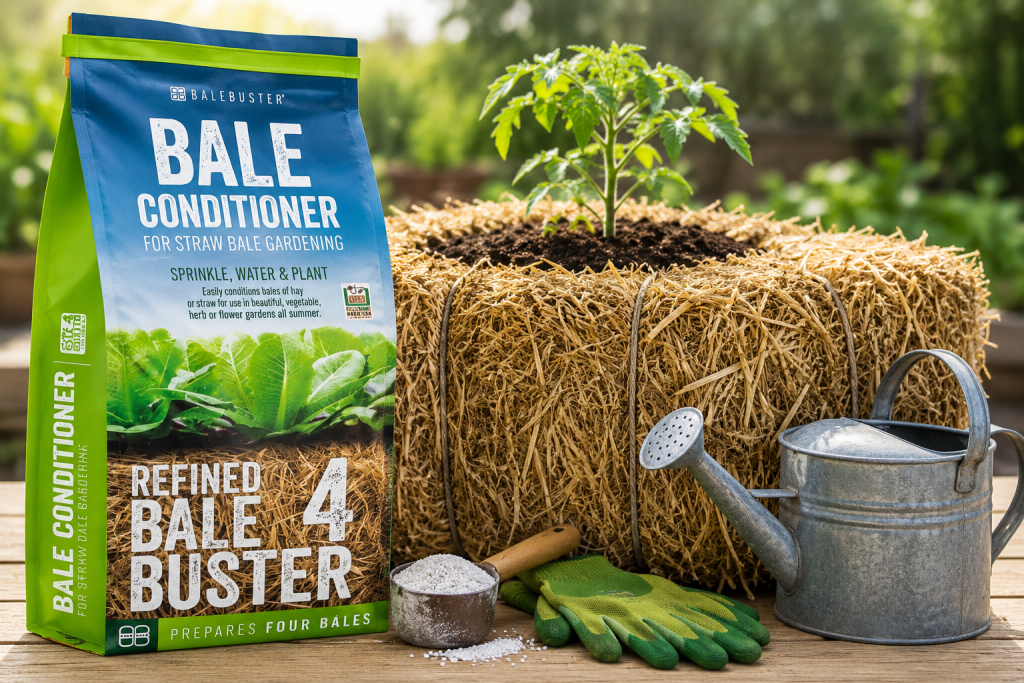
One of the first things people discover when learning about straw bale gardening is that they cannot simply place plants into a fresh straw bale and expect everything to grow properly.
Before planting begins, the bale must go through a preparation stage called bale conditioning.
This step is what transforms a dry straw bale into a productive growing environment capable of supporting healthy vegetables, herbs, and flowers. Without conditioning, the bale is simply compacted straw. After conditioning, it becomes a warm, nutrient-rich growing medium that supports strong root development and healthy plant growth.
For beginners, bale conditioning is often the most misunderstood part of straw bale gardening. Some people skip it completely, others rush through it, and many are unsure whether they are doing it correctly.
The truth is that conditioning is the foundation of the entire straw bale gardening method. When done properly, it creates the internal biological activity needed for plants to thrive. When done poorly, the garden struggles from the start.
Understanding how conditioning works and why it matters can make the difference between a successful straw bale garden and one that becomes frustrating to maintain.
What Is Bale Conditioning?
Bale conditioning is the process of preparing a straw bale for planting by adding water and nutrients over a period of time.
During this process, naturally occurring bacteria inside the bale begin breaking down the straw fibers. As decomposition starts, the inside of the bale gradually transforms into compost-like organic material.
This transformation is what allows plants to grow successfully in the bale.
A fresh straw bale is too dry, too compact, and too biologically inactive to support healthy roots. Conditioning activates microbial life within the bale and creates an environment where roots can access nutrients, oxygen, and moisture.
In many ways, the process is similar to composting.
When organic material breaks down naturally, bacteria consume the material and release nutrients. Bale conditioning follows this same principle, except the decomposition occurs inside the straw bale itself.
As the microbes begin feeding on the straw, the bale softens internally and becomes increasingly suitable for plant growth.
By the end of the conditioning period, the bale is no longer just straw. It has started becoming living organic matter capable of functioning like a raised garden bed.
Why Bale Conditioning Matters
Many beginners underestimate how important conditioning really is.
They often focus on seeds, watering schedules, or plant varieties while overlooking the preparation of the bale itself.
But in straw bale gardening, everything begins with conditioning.
The conditioning process determines:
- How well roots establish
- How nutrients become available
- How moisture is retained
- How productive the plants become
When a bale is properly conditioned, plants establish themselves quickly and begin vigorous growth early in the season.
The internal decomposition process releases nutrients that plants can absorb through their roots. At the same time, the decomposing straw creates air pockets that improve drainage and oxygen flow.
This combination of nutrients, moisture retention, warmth, and aeration creates an ideal environment for plant growth.
Without conditioning, these biological processes never fully develop.
Fresh straw alone contains very little immediately available nutrition for plants. Until decomposition begins, the bale cannot function effectively as a growing medium.
This is why poorly conditioned bales often lead to:
- Weak plant growth
- Yellowing leaves
- Slow root development
- Poor harvests
- Nutrient deficiencies
Conditioning solves these problems before planting even begins.
What Happens Inside the Bale During Conditioning?
One of the most interesting parts of straw bale gardening happens inside the bale where you cannot immediately see it.
Once water and nutrients are added, bacteria already present within the straw begin feeding on the organic material.
As microbial activity increases:
- The straw starts softening
- Internal heat develops
- Nutrients begin releasing
- Moisture retention improves
- Decomposition accelerates
The process creates a small composting system inside the bale.
This is why conditioned bales often become warm to the touch during preparation. The heat is produced naturally by microbial activity as the bacteria break down the straw fibers.
This warmth can actually benefit plants later by creating a slightly warmer root zone during early growth.
The decomposition process also converts straw into a softer, looser material that roots can penetrate more easily.
Instead of struggling through dense, dry straw, roots grow into partially decomposed organic matter rich in nutrients and moisture.
Over time, the bale continues decomposing throughout the growing season, feeding the plants naturally as they grow.
Why Fresh Straw Alone Is Not Enough
One common misconception is that straw itself feeds the plants immediately.
It does not.
Fresh straw is mostly carbon-rich plant material. Before it can support healthy plant growth, it must first begin decomposing.
Without conditioning:
- Nutrients remain unavailable
- The straw stays compact
- Water distribution becomes inconsistent
- Roots struggle to establish
This is why planting directly into an untreated straw bale usually produces disappointing results.
Conditioning activates the biological processes that make straw bale gardening effective in the first place.
Once decomposition begins, nutrients become available gradually as the straw breaks down.
The conditioned bale essentially becomes a slow-release growing medium that continues feeding the plants over time.
How Long Does Bale Conditioning Take?
The conditioning process usually takes between 10 and 18 days depending on several factors.
These include:
- Temperature
- Moisture levels
- Type of straw
- Amount of nutrients used
- Weather conditions
Warm weather generally speeds up microbial activity, while cooler temperatures slow it down.
Most gardeners begin conditioning several weeks before planting season begins.
By the end of the process, the bale should:
- Feel softer internally
- Retain moisture better
- Show signs of decomposition
- Feel warm inside
These are signs that the microbial activity is working properly and the bale is becoming ready for planting.
Patience during this stage is important.
Planting too early before decomposition is fully active often leads to weaker plant growth later.
What You Need for Bale Conditioning
The conditioning process itself is relatively simple and does not require complicated equipment.
At its core, conditioning requires:
- Water
- Nutrients
- Time
Water supports microbial life and keeps the bale moist enough for decomposition to continue.
Nutrients feed the bacteria and help accelerate the breakdown of straw fibers.
Some gardeners attempt conditioning using general-purpose fertilizers, but this often creates inconsistent results because different fertilizers vary greatly in nutrient balance and application rates.
This is one reason many straw bale gardeners prefer using conditioning systems specifically designed for straw bale gardening.
Products created for bale conditioning simplify the process by providing nutrients in ratios intended to support microbial decomposition inside straw bales.
For beginners especially, this removes much of the guesswork involved in preparing the bale correctly.
Why Many Gardeners Use Specialized Conditioning Products
One of the challenges beginners face is knowing:
- Which fertilizer to use
- How much to apply
- How often to apply it
Using random fertilizers can lead to problems such as:
- Excess nutrient buildup
- Insufficient decomposition
- Uneven conditioning
- Plant stress later in the season
Because of this, many gardeners prefer using products formulated specifically for straw bale gardening.
Conditioning products designed for straw bale gardens help:
- Feed beneficial microbes
- Accelerate decomposition
- Simplify preparation
- Improve consistency
Instead of experimenting with measurements and fertilizer types, gardeners can follow a structured conditioning process that has already been tested for straw bale gardening.
This is especially helpful for first-time gardeners who want a more predictable setup.
Signs Your Bale Is Properly Conditioned
A conditioned bale behaves very differently from a fresh bale.
Several signs indicate that conditioning is progressing correctly.
Internal Warmth
One of the clearest signs is heat inside the bale.
Microbial activity naturally generates warmth during decomposition. The center of the bale may feel noticeably warmer than the outer surface.
Softer Straw
As decomposition progresses, the straw begins loosening internally.
The bale becomes less rigid and easier to penetrate when planting.
Better Moisture Retention
Conditioned bales hold water more effectively because decomposition improves the structure of the material inside the bale.
Visible Decomposition
The inside of the bale may begin showing darker, compost-like material forming near the center.
These signs indicate that the bale is becoming biologically active and suitable for planting.
Common Bale Conditioning Mistakes
Although conditioning is relatively straightforward, beginners still make several common mistakes.
Planting Too Early
One of the biggest mistakes is rushing the process.
If planting begins before decomposition is fully active, plants may struggle because nutrients are not yet available.
Inconsistent Watering
Dry bales slow microbial activity dramatically.
Conditioning requires consistent moisture to maintain decomposition.
Overwatering
Too much water can create oxygen-poor conditions inside the bale and reduce microbial efficiency.
Using Hay Instead of Straw
Hay often contains seeds that sprout weeds throughout the growing season.
Proper straw bales should contain minimal seed material.
Using Incorrect Fertilizers
Random fertilizer combinations can create nutrient imbalances that negatively affect conditioning.
Avoiding these mistakes significantly improves the success of a straw bale garden.
Why Conditioned Bales Grow Plants So Well
Once properly conditioned, straw bales create surprisingly productive growing environments.
The decomposition process creates several advantages:
- Improved drainage
- Better aeration
- Nutrient availability
- Moisture retention
- Warm root zones
Together, these conditions support rapid root growth and strong plant development.
Many gardeners are surprised by how productive conditioned straw bales become compared to traditional garden beds.
Tomatoes, peppers, cucumbers, lettuce, herbs, zucchini, and many other vegetables perform extremely well in properly conditioned bales.
The loose internal structure allows roots to spread easily while maintaining consistent moisture around the root zone.
This balance of air and water is one reason straw bale gardening works so effectively.
The Long-Term Benefits of Conditioning
Conditioning does more than prepare the bale for a single planting season.
As decomposition continues, the bale gradually transforms into compost-like material that can later be reused in other gardening applications.
At the end of the season, many gardeners use decomposed bales as:
- Mulch
- Compost material
- Soil amendment
- Raised bed filler
Very little goes to waste.
The bale continues providing value even after the growing season ends.
Final Thoughts
Bale conditioning is the process that makes straw bale gardening possible.
Without it, the bale remains dry straw with limited biological activity and poor growing potential.
With proper conditioning, the bale becomes a living growing environment capable of producing healthy vegetables with surprisingly little maintenance.
The process may seem unfamiliar at first, but it is actually one of the simplest parts of straw bale gardening once understood properly.
Most importantly, conditioning creates the foundation for everything that happens afterward.
Strong roots, healthy plants, and productive harvests all begin with a properly prepared bale.
For anyone interested in straw bale gardening, learning how conditioning works is one of the best investments you can make before planting season begins.