
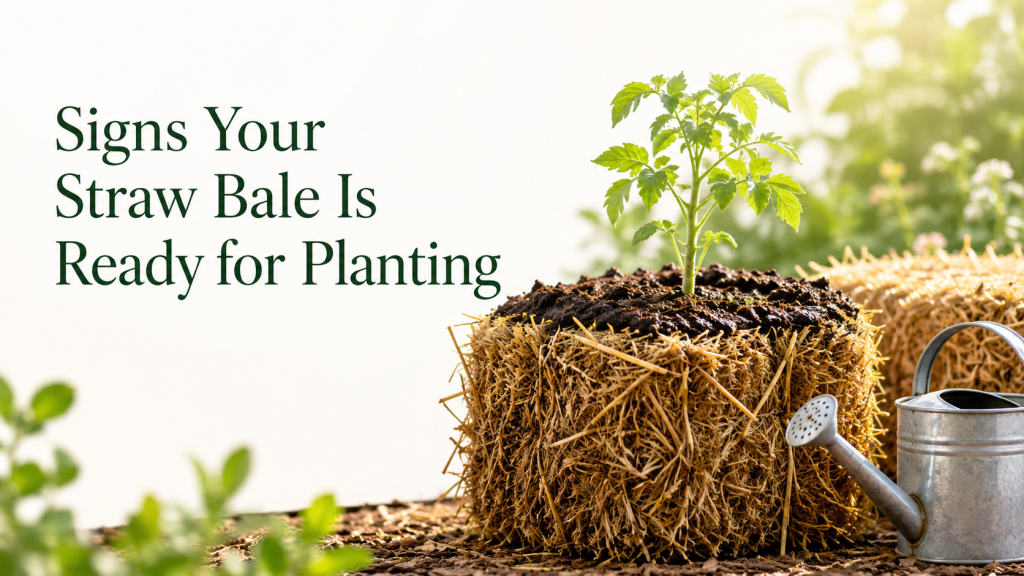
One of the most important parts of straw bale gardening is knowing when your bale is actually ready for planting.
It is not enough to simply place a straw bale in the garden, water it once, and start planting. A fresh bale needs time to go through the conditioning process before it can support healthy plant growth.
Conditioning is what turns the inside of the bale from dry straw into a warm, active, nutrient-rich growing environment. Once that process has started properly, the bale becomes much more suitable for vegetable seedlings, herbs, and flowers.
But this brings up a common question:
How do you know when your straw bale is ready?
There are a few clear signs to look for. Some are visible. Some can be felt. Others are based on timing and how the bale behaves when watered.
This guide will walk you through the main signs that your straw bale is ready for planting, the mistakes to avoid, and what to do if your bale still needs more time.
Why Straw Bales Need to Be Ready Before Planting
A fresh straw bale is not the same as soil.
It is dry, compact plant material. It does not immediately provide the nutrients, moisture balance, or root environment that plants need to grow well.
Before planting, the bale must begin breaking down inside. This happens during conditioning.
During conditioning, water and nutrients are added to the bale. This activates beneficial microbes inside the straw. These microbes begin decomposing the straw fibers, creating heat, releasing nutrients, and softening the inside of the bale.
This process creates the growing environment your plants need.
If you plant too early, your seedlings may struggle because the bale is not ready to support root growth.
Common problems from planting too early include:
- Slow growth
- Yellowing leaves
- Weak roots
- Poor moisture balance
- Poor harvests
- Plant stress from excess internal heat
This is why checking the bale before planting matters.
The goal is not just to finish a certain number of days. The goal is to make sure the bale has actually started changing internally.
Sign 1: The Bale Feels Warm Inside
One of the first signs that conditioning is working is internal warmth.
As bacteria break down the straw, they generate heat. This is a normal part of the decomposition process.
If you place your hand into the center of the bale, it may feel warm compared to the outside air. That warmth tells you microbial activity is happening inside.
However, there is one important detail.
The bale should not be too hot when you plant.
During active conditioning, the inside of the bale can become very warm. This is good during preparation, but young roots can be stressed if planted while the bale is still too hot.
Before planting, the internal heat should begin to settle. A bale that feels gently warm is usually close to ready. A bale that feels hot should be given more time.
If you have a compost thermometer, you can check the internal temperature more accurately. If not, your hand can still give you a practical idea.
The bale should feel alive and active, but not hot enough to damage seedlings.
Sign 2: The Straw Has Started to Soften
A fresh straw bale feels stiff and tightly packed.
After conditioning, the inside should begin to soften.
This happens because the straw fibers are starting to break down. As the bale decomposes, it becomes easier for roots to move through the material.
You can test this by pressing your fingers into the top of the bale or gently opening a small space in the planting area.
If the bale is ready, the straw should not feel completely dry, sharp, and rigid. It should feel softer, slightly looser, and more workable.
This does not mean the whole bale will feel like finished compost. It will still look like straw in many areas. But it should no longer feel completely fresh and unchanged.
Softening is a good sign that decomposition has started.
Sign 3: The Bale Holds Moisture Better
At the beginning of conditioning, water may run through the bale quickly.
Fresh straw can be difficult to hydrate evenly because it is dry and compact. But as conditioning progresses, the bale begins holding moisture more effectively.
This is an important sign that the internal structure is changing.
A conditioned bale should stay moist inside without being waterlogged. When you water it, the bale should absorb and retain moisture rather than immediately shedding water.
This moisture helps support root growth after planting.
To check this, feel inside the bale a few hours after watering. If it is still moist inside, that is a good sign.
If the bale is dry shortly after watering, it may need more conditioning time or more consistent watering.
The goal is steady moisture, not soaking wet straw.
Sign 4: The Inside Looks Darker
Another sign your straw bale is getting ready is a darker color inside.
Fresh straw is usually golden, dry, and bright.
As decomposition begins, the inside may start to look darker and more compost-like. This change usually happens first near the center of the bale, where moisture and microbial activity are strongest.
You do not need the entire bale to look like soil before planting. That is not the goal.
But if you open a small planting space and notice that the inside looks darker, softer, and slightly broken down, that is a good sign.
It means the straw is beginning to transform into a growing medium.
If the inside still looks completely dry and unchanged, the bale may need more time.
Sign 5: The Conditioning Timeline Has Been Completed
Timing still matters.
Most straw bales take around 10 to 18 days to condition, depending on the method used.
Traditional conditioning products may prepare bales in about 10 to 12 days. Organic conditioning can take closer to 14 to 18 days because the nutrient sources often break down more slowly.
Weather also affects timing.
Warm conditions speed up microbial activity. Cold conditions slow it down.
A general guide is:
- Traditional conditioning: 10 to 12 days
- Organic conditioning: 14 to 18 days
- Cooler weather: allow extra time
- Warm weather: process may move faster
However, do not plant based only on the calendar.
Use timing together with the physical signs of readiness.
If the recommended conditioning period has passed and the bale feels warm, moist, softer, and slightly decomposed inside, it is likely ready.
If the days have passed but the bale still feels dry, cold, and stiff, give it more time.
Sign 6: The Bale No Longer Smells Fresh and Dry
Fresh straw has a dry, grassy smell.
As the bale conditions, the smell may begin to change slightly. It may smell more earthy as decomposition begins.
This earthy smell is a good sign.
It means biological activity is happening inside the bale.
However, the bale should not smell rotten, sour, or unpleasant. A bad odor may mean the bale has become too wet and oxygen is limited inside.
A healthy conditioned bale should smell natural, damp, and earthy, not foul.
If the bale smells bad, reduce watering slightly and allow more airflow. It may need time to balance out before planting.
Sign 7: The Bale Feels Stable but Plantable
A ready bale should still be stable enough to hold its shape, but soft enough to plant into.
If the bale is too fresh, it may feel tight and difficult to open for planting.
If it is over-decomposed or poorly tied, it may begin falling apart too early.
The ideal bale is somewhere in the middle.
It should hold together, but you should be able to create small planting pockets in the top without fighting the straw.
This gives seedlings a good place to establish roots while the bale continues decomposing throughout the season.
If a bale is starting to loosen too much, you can support it with stakes, twine, or wire mesh to help it keep its shape.
Sign 8: Seedlings Can Be Planted Without Heat Stress
Before planting, always think about your seedlings.
Seedlings are more delicate than established plants. If the bale is still too hot inside, young roots may become stressed.
The best time to plant is after the peak heating stage has passed.
The bale can still be slightly warm, but it should not feel hot.
If you are unsure, wait another day or two.
It is better to plant slightly later into a properly prepared bale than to plant too early and stress the seedlings.
This is especially important for tender vegetables like tomatoes, peppers, cucumbers, and squash.
What If Your Bale Is Not Ready Yet?
If your bale is not showing the signs above, do not rush.
A bale that is not ready can usually be fixed with a little more time and attention.
If the bale feels dry, continue watering consistently.
If it feels cold and inactive, make sure it has received enough conditioning nutrients.
If it is too hot, wait until the temperature settles.
If it smells sour or overly wet, reduce watering and let it breathe.
Most conditioning problems come from one of three things:
- Not enough moisture
- Too much moisture
- Not enough time
Be patient. Straw bale gardening works best when the bale is allowed to properly prepare before planting.
Can You Speed Up Bale Readiness?
You can support the process, but you should not force it.
To help your bale condition properly:
- Place it in a sunny location
- Keep it consistently moist
- Use a conditioning product designed for straw bale gardening
- Follow the application instructions carefully
- Avoid overwatering
- Start conditioning two to three weeks before planting
The goal is not to rush the bale.
The goal is to create the right environment for decomposition to happen naturally.
Recommended Conditioning Support
If you want to make the process easier, using a product designed specifically for straw bale gardening can help.
A product such as BaleBuster4 Bale Conditioner is useful for gardeners preparing up to four bales. It helps provide the nutrients needed to support the conditioning process and reduce guesswork.
This can be especially helpful for beginners who are unsure how much nutrient material to apply or when the bale should be ready.
For smaller gardens, a single-bale conditioning option may be enough. For larger gardens, a multi-bale package can make the process more consistent.
The key is to choose a conditioning product that matches the number of bales you plan to prepare.
Common Mistakes When Checking Bale Readiness
Many beginners make mistakes when deciding whether their bale is ready.
Planting Only Because the Timeline Is Finished
Just because 10 or 14 days have passed does not automatically mean the bale is ready.
Always check the physical signs.
Planting While the Bale Is Too Hot
Warmth is good, but excessive heat can stress roots.
Wait until the peak heat has settled.
Letting the Bale Dry Out During Conditioning
Dry bales do not decompose properly.
Consistent moisture is essential.
Overwatering the Bale
Too much water can reduce oxygen inside the bale and create poor conditions for microbes.
Ignoring the Inside of the Bale
The outside may look normal, but the inside tells you more about readiness.
Check the center before planting.
Quick Checklist: Is Your Straw Bale Ready?
Before planting, ask these questions:
- Has the bale completed its conditioning period?
- Does the inside feel warm but not hot?
- Has the straw started to soften?
- Does the bale hold moisture better than before?
- Does the inside look slightly darker or more broken down?
- Does it smell earthy rather than sour?
- Can you create planting pockets easily?
- Are the seedlings safe from excess internal heat?
If most of these answers are yes, your bale is likely ready for planting.
If several answers are no, give it more time.
Final Thoughts
Knowing when your straw bale is ready for planting is one of the most important skills in straw bale gardening.
A ready bale should be warm but not hot, moist but not soaked, soft but still stable, and beginning to decompose inside.
These signs show that microbial activity has started and the bale is becoming a suitable growing environment for plants.
Do not rush this stage.
The time you spend preparing the bale properly will make the rest of the growing season easier.
Once the bale is ready, your seedlings will have a better foundation for strong roots, healthy growth, and a more productive harvest.
Start With a Properly Conditioned Bale
Before planting, make sure your straw bale is truly ready.
Explore bale conditioning products designed specifically for straw bale gardening and choose the right option for your garden size.
A successful straw bale garden starts with preparation. Once the bale is ready, planting becomes much easier.