
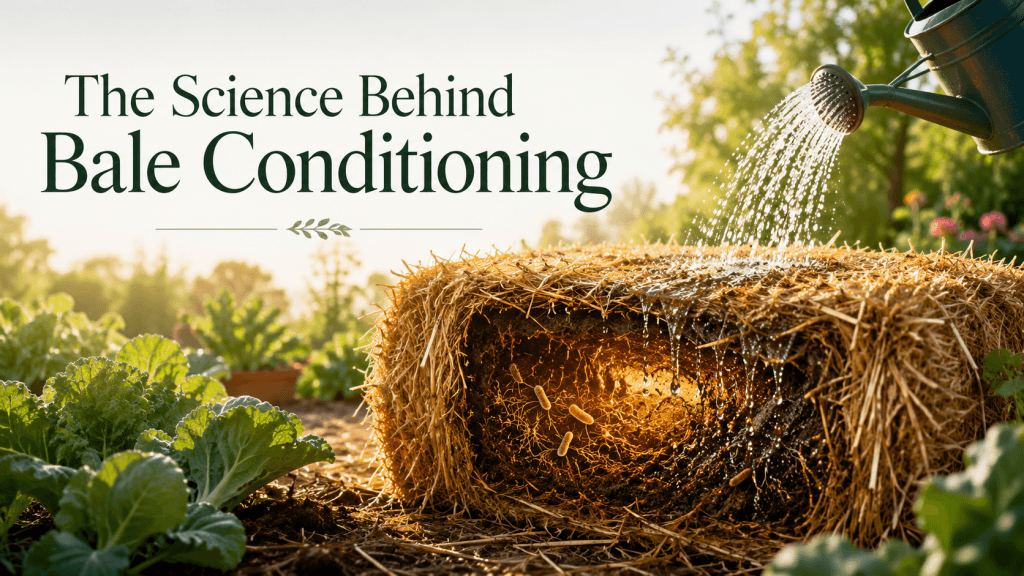
Bale conditioning is the step that makes straw bale gardening work.
A fresh straw bale may look like a ready-made garden bed, but plants cannot grow well in dry, untreated straw. The bale needs time, water, nutrients, and microbial activity before it becomes a good place for roots.
That process is called conditioning.
During conditioning, the inside of the bale begins to change. Microbes wake up. Straw fibers start breaking down. Heat may build inside the bale. Moisture moves deeper into the material. Over time, the bale becomes softer, warmer, and more useful for plant roots.
This is the science behind bale conditioning.
Once you understand it, the method becomes easier to follow. You stop guessing. You know why timing matters, why water matters, why nitrogen matters, and why products like BaleBuster are designed around the conditioning stage.
What Bale Conditioning Really Means
Bale conditioning means preparing a straw bale before planting.
You are not simply wetting the bale. You are starting a biological process inside it.
Straw contains carbon-rich plant material. On its own, that material breaks down slowly. When you add water and the right nutrients, bacteria and fungi become active inside the bale. These microbes begin feeding on the straw and gradually turn it into a better growing environment.
That is why the Straw Bale Gardens method describes the bale as both the container and the growing medium. The outside holds the shape, while the inside becomes conditioned compost as it decomposes.
A conditioned bale gives plants a better root zone than fresh straw.
Why Fresh Straw Is Not Ready for Planting
Fresh straw does not offer young plants everything they need.
It can feel dry, stiff, and low in available nutrients. Roots may struggle to move through it. Water may not distribute evenly at first. The bale also needs microbial activity before it becomes productive.
Conditioning fixes those problems.
As the bale breaks down, the inside becomes softer and more active. Nutrients become more available. Moisture spreads through the straw more effectively. The internal environment becomes friendlier for roots.
This is why planting too early can cause poor growth.
The bale may look ready from the outside, but the inside may still be raw straw.
The Role of Microbes in Conditioning
Microbes drive the conditioning process.
Bacteria and fungi live naturally in organic materials. When they get moisture, nutrients, and the right temperature, they begin to multiply.
Inside a straw bale, those microbes feed on the straw fibers. As they work, the bale starts to decompose from the inside. That decomposition creates the warm, moist, nutrient-rich environment that plants need.
The article on where plants get nutrients in a straw bale explains that conditioning builds up bacteria inside the bale until they colonize it and begin digesting the straw.
That is the key.
You are not growing plants in plain straw. You are growing plants in straw that has started transforming.
Why Nitrogen Matters
Nitrogen plays a major role in bale conditioning.
Straw is high in carbon. Microbes need nitrogen to break that carbon-rich material down efficiently. Without enough nitrogen, the conditioning process can move too slowly.
This is why gardeners use a conditioning product or a proper nitrogen source before planting.
The organic nitrogen guide from Straw Bale Gardens explains that some materials do not contain enough active nitrogen to condition bales quickly. That matters because a weak nitrogen source may leave the bale underprepared.
Good nitrogen support helps microbes multiply. Once microbial activity increases, the straw begins breaking down faster.
That is why conditioning is not optional.
It feeds the process that prepares the bale.
Why Water Matters
Water activates the bale.
Microbes need moisture to move, feed, and reproduce. A dry bale slows the entire process.
During conditioning, water helps carry nutrients into the bale. It also helps create the damp environment microbes need to break down straw.
However, more water does not always mean better conditioning.
A soaked bale can lose airflow inside. Microbes need oxygen as well as moisture. When the bale stays waterlogged, the process can become unbalanced.
The goal is steady moisture.
A good bale should feel damp inside, not dry and not flooded.
Why the Bale Gets Warm
Heat is one of the most visible signs of microbial activity.
As microbes feed on straw and multiply, they release heat. This is similar to what happens in a compost pile.
A warming bale usually means the conditioning process has started.
Still, heat is not the only sign that the bale is working. Some bales may warm gently, especially in cooler weather. Others may heat more strongly.
The Straw Bale Gardens article on bales not getting hot explains that bales do not need extreme heat to succeed. Warmth can show bacterial activity, but the full readiness check should include moisture, timing, and softening.
Think of heat as a clue.
Do not treat it as the only measurement.
Why Timing Matters
Conditioning takes time because microbes need time to work.
A bale cannot transform instantly. Water needs to enter the bale. Nutrients need to reach the interior. Microbial activity must build. The straw must begin breaking down before plants go in.
Joel Karsten’s guide on how to start straw bale gardening recommends beginning the conditioning process before planting so the bale can prepare properly.
Cold weather can slow the process. Warm weather can help it move faster.
That is why gardeners should not rely only on the calendar. A timing guide helps, but the bale itself should confirm readiness.
Check the center.
Look for moisture, warmth, softening, and a more workable texture.
Organic vs Traditional Conditioning
Both organic and traditional conditioning methods aim to do the same thing: feed the microbial process inside the bale.
The difference comes from the source of the nutrients.
Organic formulas use organic inputs. Traditional formulas may use refined nutrient sources. The right choice depends on the gardener’s preference and garden size.
If you want a one-bale organic option, BaleBuster1 fits that setup.
For gardeners preparing four average-size bales, BaleBuster4 matches a small starter garden.
Larger gardens need a bigger product size. BaleBuster20 is the twenty-bale option listed with a traditional NPK formulation.
The science stays the same.
Microbes need fuel, water, oxygen, and time.
How BaleBuster Fits Into the Science
BaleBuster products are designed for the conditioning stage.
They help gardeners prepare bales with a product size that matches the number of bales being conditioned. That matters because using too little product across too many bales can create uneven results.
For example, BaleBuster4 is made for four average-size bales. That makes the product choice simple for a beginner setting up a four-bale garden.
A one-bale gardener can choose BaleBuster1. A larger grower can use BaleBuster20.
The product does not replace good gardening habits.
You still need sunlight, water access, proper placement, and patience. BaleBuster simply supports the conditioning process that prepares the bale before planting.
What Happens Inside the Bale
Inside the bale, several things happen at once.
First, water enters the straw and creates a moist environment.
Next, nutrients feed the microbes.
Then bacteria and fungi begin breaking down the straw fibers.
As the microbes work, the bale may warm from the inside.
Over time, the straw softens and becomes more open for roots.
Nutrients also become easier for plants to access as decomposition continues.
This process explains why a properly conditioned bale can support strong plant growth. The bale becomes active, not just wet.
Signs the Conditioning Process Is Working
You can often tell when conditioning has started.
The bale may feel warmer inside than outside.
The straw may feel softer than it did on day one.
Water may soak in more evenly.
The center may feel damp and active.
The smell may become more earthy.
These signs show that the bale is changing.
Avoid judging only by appearance. A conditioned bale may still look like straw from the outside. The important changes happen inside.
What Can Slow Conditioning Down?
Several things can slow the science down.
Cold weather can reduce microbial activity.
Dry straw can stop microbes from working well.
Too much water can limit airflow.
Weak nitrogen sources may not feed the process enough.
Poor bale placement can make watering inconsistent.
Using the wrong product size can leave some bales under-conditioned.
Most problems come from one of these issues. Before assuming the method failed, check the basics.
Is the bale moist inside?
Did you use the right product for your bale count?
Did cold weather slow the process?
Did the bale receive enough time?
Those questions usually reveal the problem.
Why You Should Not Rush Planting
Planting too early can weaken the garden.
Young roots need a prepared environment. If the bale is still dry, stiff, or too active with strong heat, seedlings may struggle.
Wait until the bale has completed conditioning and shows signs of readiness.
The center should feel moist. The straw should soften. Strong heat should settle before planting.
A few extra days can make a big difference.
Rushing the process often costs more than waiting.
What Happens After Planting?
Conditioning does not stop the moment you plant.
The bale continues breaking down during the growing season. Roots grow into the softened material. Moisture keeps the system active. Microbes continue working around the root zone.
This ongoing decomposition helps explain why straw bale gardening can stay productive through the season.
The bale keeps changing as the plants grow.
That is why watering remains important after planting. The bale still needs moisture to support both roots and microbial activity.
Choosing the Right Product Based on the Science
The best BaleBuster choice depends on your bale count and formula preference.
Choose BaleBuster1 if you want to condition one bale with an organic option.
For four-bale starter garden, use BaleBuster4
Choose BaleBuster20 if your garden has twenty bales.
If you want the four-bale product plus the full method, the BaleBuster4 Starter Kit includes BaleBuster4 with Straw Bale Gardens Complete.
The science does not require guessing.
Count the bales. Choose the matching product. Condition before planting.
Common Conditioning Mistakes
Many conditioning problems start with simple mistakes.
Some gardeners plant before the bale is ready.
Others let the bale dry out during conditioning.
A few overwater until the bale smells sour.
Some use the wrong product size.
Others place the bale too far from water.
These mistakes can slow decomposition and weaken early plant growth.
A better setup begins before planting day. Place the bales properly, keep water nearby, use the correct product, and give microbes time to work.
FAQ: The Science Behind Bale Conditioning
What is bale conditioning?
Bale conditioning is the process of preparing straw bales before planting. It uses water, nutrients, and microbial activity to begin breaking down the straw.
Why does a straw bale need conditioning?
A fresh bale is not ready for roots. Conditioning helps the inside become softer, warmer, moister, and more nutrient-friendly.
Why does the bale get warm?
Microbes release heat as they break down straw. This warmth often shows that microbial activity has started.
Does every bale need to get hot?
No. Some bales may only warm slightly, especially in cool weather. Moisture, softening, and timing also matter.
What does BaleBuster do?
BaleBuster supports the conditioning process by helping prepare straw bales before planting. Choose the product based on the number of bales you want to condition.
Final Thoughts
The science behind bale conditioning is simple but powerful.
A straw bale becomes useful when microbes begin breaking it down from the inside. Water wakes the process up. Nutrients feed it. Warmth signals activity. Time allows the bale to transform.
That is why conditioning matters so much.
You are not just preparing a place to plant. You are creating a living root environment inside the bale.
Start with the right product for your bale count.
Keep the bale moist.
Give the microbes time to work.
Then plant when the bale is ready.