
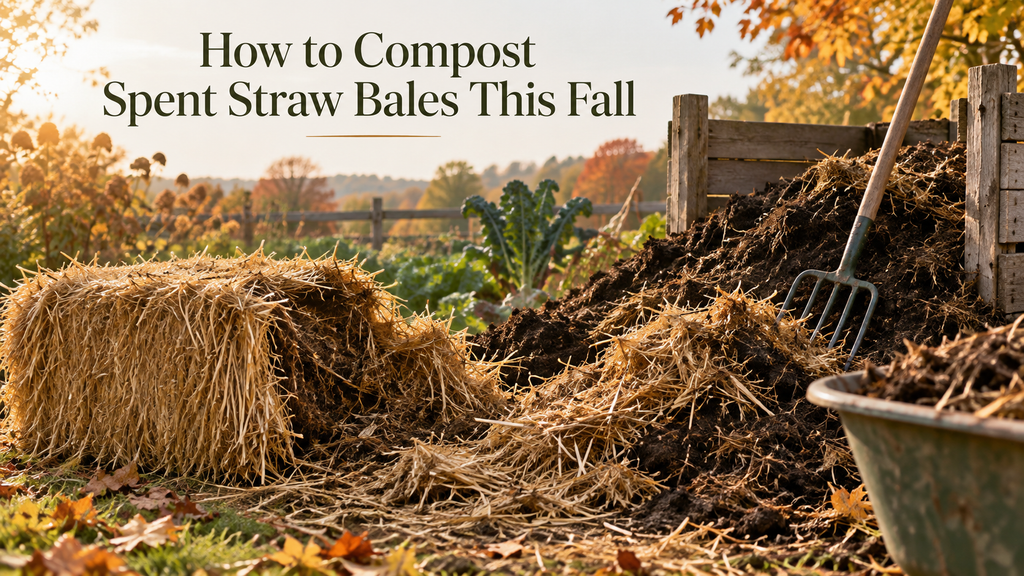
When the growing season ends, your straw bales may look nothing like the firm, tightly packed bales you started with in spring. They may be softer, darker, partly collapsed and filled with roots and decompressed straw. That is not a failed bale. It is the natural result of a season of decomposition and plant growth. instead of throwing that material away, fall is a good time to put it to work somewhere else in your garden.
Spent straw bale material can be added to a compost pile, used as organic material around garden beds, or incorporated into future garden projects. The straw bale Gardens method itself relies on decomposition to transform straw into a compost-like growing medium, so by the end of the season, much of that process has already begun.
First, Decide Whether the Bale Is Actually Finished
Before breaking everything apart, take a quick look at each bale.
Some bales may still have enough structure for another growing season. Others will have decomposed too far to remain useful as a planting container.
If the bale still holds together reasonably well, you may want to consider reusing it before sending it to the compost pile.
However, if the bale has:
- Collapsed significantly
- Lost most of its original shape
- Broken strings
- Become loose and difficult to contain
- Turned into mostly decomposed organic material
then composting it may be the better option.
This also gives you a useful internal-link opportunity:
Not sure whether your bale is finished? Read: “Can You Reuse Straw Bales for a Second Season?”
Step 1: Remove the Old Plants
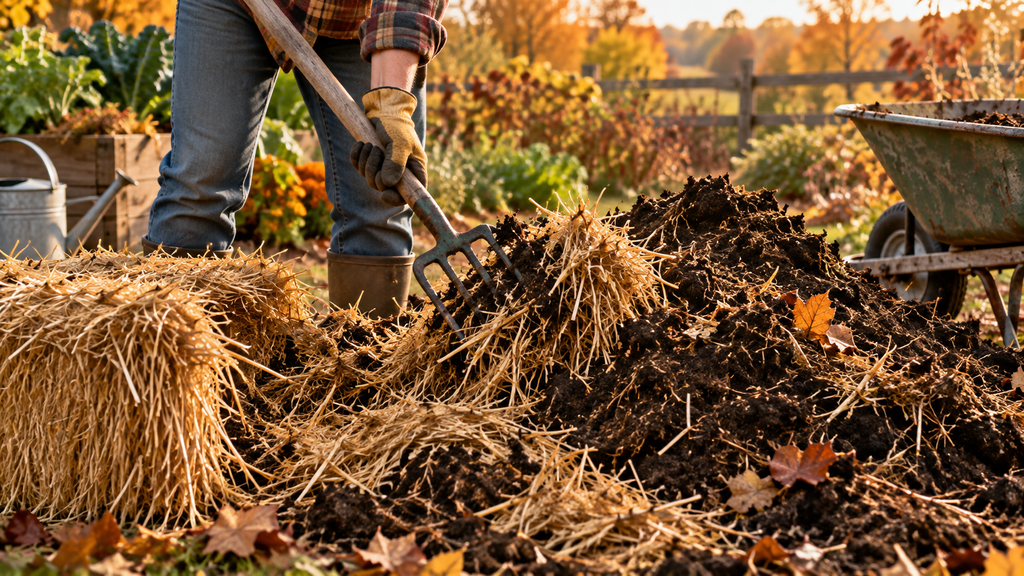
Start by clearing out the finished plants.
Pull out:
- Vegetable plants
- Annual flowers
- Large stems
- Stakes
- Tomato cages
- Trellises
- Plant ties
- Labels
You do not have to remove every small root from inside the bale. Fine roots can break down along with the straw.
However, take care with plants that showed clear signs of disease.
For a typical home compost pile, it is safer to keep heavily diseased plant material out because many backyard piles do not remain hot enough for long enough to destroy certain plant pathogens. University of Minnesota Extension specifically recommends removing diseased plant debris from the garden rather than putting it into a normal home compost pile unless the pile can reliably reach sufficiently high temperatures.
Healthy plant material can generally become part of the composting process.
Step 2: Remove Strings and Other Non-Compostable Materials
Before breaking up the bale, remove the strings that held it together.
This is especially important if the bale uses synthetic twine.
Natural-fiber strings may eventually break down, but removing all strings makes the finished compost easier to work with and prevents pieces from becoming tangled around tools later.
Also remove:
- Plastic clips
- Irrigation fittings
- Landscape staples
- Wire
- Plant labels
- Other garden hardware
At this point, you should be left with mostly straw, roots, and decomposed organic matter.
Step 3: Break the Bale Apart
A spent bale may still be compressed in the middle.
Pull it apart so the material is loose rather than leaving one large compact block.
You can use:
- A garden fork
- A shovel
- A rake
- Your hands with suitable gardening gloves
Breaking the bale apart increases the amount of material exposed to air and makes it easier to mix with the rest of your compost pile.
Do not worry if some parts look more decomposed than others. That is normal.
The outside may still resemble straw while the center may already look dark and compost-like.
Step 4: Add It to Your Compost Pile
Straw is primarily a carbon-rich material, so it works well when mixed with wetter, nitrogen-rich garden materials.
You might combine the spent straw with materials such as:
- Fresh grass clippings
- Healthy garden trimmings
- Vegetable scraps
- Finished annual plants
- Green leaves
- Other compostable garden material
Joel Karsten’s guidance also notes that partially decomposed straw from previous Straw Bale Gardens can be reused alongside other compostable organic materials when creating new garden bales.
You do not need to make the mixture complicated.
The basic goal is to avoid creating a pile made entirely from dry straw. Mixing the old straw with greener, moister materials encourages a more balanced decomposition process.
Step 5: Keep the Pile Moist, Not Waterlogged
Microorganisms need moisture to continue breaking down organic material.
However, soaking the pile constantly can reduce airflow.
Aim for compost that stays damp without becoming saturated.
If fall weather is dry, add some water as you build the pile.
If you receive frequent rain, avoid constantly flooding the compost.
Remember that your spent bales have already been watered throughout the growing season, so some of the interior material may still hold significant moisture.
Step 6: Give the Compost Some Air
A tightly compressed pile can slow down as oxygen becomes limited.
Turning or mixing the pile occasionally helps expose different parts of the material to air.
You do not have to turn it every day.
When convenient, use a garden fork to move the outside material toward the center and loosen compacted sections.
University of Minnesota Extension notes that turning compost improves oxygen distribution by moving material between the center and outside of the pile.
If you prefer a slower, low-maintenance approach, you can also allow the pile to decompose gradually over fall and winter.
It will simply take longer.
What Happens During Winter?
Do not worry if the composting process slows considerably once temperatures drop. Cold weather reduces microbial activity, but the material does not become useless. The pile can remain in place through winter and begin decomposing more actively again as temperatures warm.
By spring, some of the straw may still be recognizable while other portions may have broken down much further. There is no requirement that every piece completely disappear before the material has value in the garden.
How Do You Know When the Compost Is Ready?
Finished or well-matured compost should look quite different from the original bale.
Look for material that is:
- Darker in color
- Loose and crumbly
- Mostly broken down
- Earthy rather than strongly smelling of fresh plant material
- Difficult to identify as individual pieces of straw
Do not rush unfinished compost directly into sensitive growing areas. Allow it more time when large amounts of undecomposed straw are still present.
You Do Not Have to Compost the Bale in a Pile
A traditional compost pile is only one option.
The official Straw Bale Gardens guidance identifies several useful destinations for decomposed bale material.
Use It Around Garden Beds
Spent straw can serve as organic material around established garden areas once it is suitable for that use.
The main Straw Bale Gardens beginner guidance specifically notes that decomposed straw can be added to a compost pile or spread around garden beds as organic material.
Add It to an Existing Compost System
If you already compost kitchen scraps, leaves, grass clippings, or garden waste, simply add the old bale material gradually rather than creating a completely separate pile.
Use It in Future Homemade Bales
Partially decomposed straw from previous gardens can also become part of newly formed bales made from compostable organic material. Joel Karsten describes combining materials such as leaves, grass clippings, garden trimmings, and partially decomposed old straw when making new bales.
That gives the material another useful life instead of sending it away as waste.
What About Bales That Had Pest Problems?
A few insects in a garden do not automatically make a bale unsuitable for composting.
The bigger concern is serious plant disease.
If plants growing in the bale suffered from a diagnosed disease, remove the infected plant material before composting the bale.
Home compost piles often do not reach the temperatures required to reliably kill every pathogen. For that reason, heavily infected plant debris may be better handled through an appropriate municipal or controlled composting system.
When in doubt, deal with the diseased plants separately rather than mixing them throughout your home compost pile.
Can You Compost an Entire Bale Without Breaking It Apart?
Eventually, yes, a bale left outdoors will continue decomposing.
But breaking it apart makes the process easier to manage.
A compact bale has less airflow through some areas and may break down unevenly. Pulling it apart also lets you remove strings, roots, garden hardware, and any questionable plant debris before adding the material to your compost pile.
For most gardeners, spending a few minutes breaking the bale down in fall will make the material easier to use later.
What Should You Do With the Compost Next Spring?
Once the material has broken down sufficiently, you can use it wherever mature compost or decomposed organic material makes sense in your garden.
Possible uses include:
- Adding organic matter around garden beds
- Mixing mature compost into appropriate garden areas
- Using it as part of future composting projects
- Incorporating it into newly made garden bales
This is one of the practical advantages of Straw Bale Gardening: the growing container gradually turns into useful organic material instead of becoming permanent waste.
Compost or Reuse? A Simple Fall Decision
Use this quick guide:
| Your Bale This Fall | Best Next Step |
| Still holds together well | Consider a second growing season |
| Weak but still usable | Reinforce and reuse if appropriate |
| Mostly collapsed | Break it apart and compost it |
| Already dark and compost-like | Add it to your compost or garden organic matter |
| Plants had serious disease | Remove infected plant material before composting |
| Starting completely fresh next spring | Compost the old material and prepare new bales |
There is no reason to force a badly decomposed bale through another growing season.
Sometimes the best use for last year’s garden is to let it become next year’s compost.
Frequently Asked Questions
Can old straw bales go directly into compost?
Yes. Spent straw from a Straw Bale Garden can be added to a compost pile once garden hardware and unsuitable plant material have been removed. The material has already undergone significant decomposition during the growing season.
Should I remove the roots first?
You can remove large root masses if they are easy to pull out, but small healthy roots can generally remain with the organic material as it decomposes.
Should I remove the bale strings?
Yes. Removing the strings before composting is the simplest approach, especially when the twine is synthetic.
Can I compost straw bales that had diseased plants?
Use caution. Diseased plant material should generally be removed from a home compost pile unless you know the compost reaches temperatures high enough to destroy the relevant pathogen.
Can spent straw be used next year instead of composted?
Sometimes. If the bale still has sufficient structure, it may be suitable for another growing season. Evaluate the bale before breaking it apart.
Turn This Season’s Bales Into Next Season’s Resource
A spent straw bale does not have to become waste at the end of fall.
Once the harvest is finished, inspect each bale. Keep the ones that still have useful structure, and break down the bales that have reached the end of their life as growing containers.
With a little cleanup, that decomposed straw can continue breaking down into useful organic material for future gardens.
And when you decide to start with fresh bales next season, remember that new bales need to be properly conditioned before planting.