
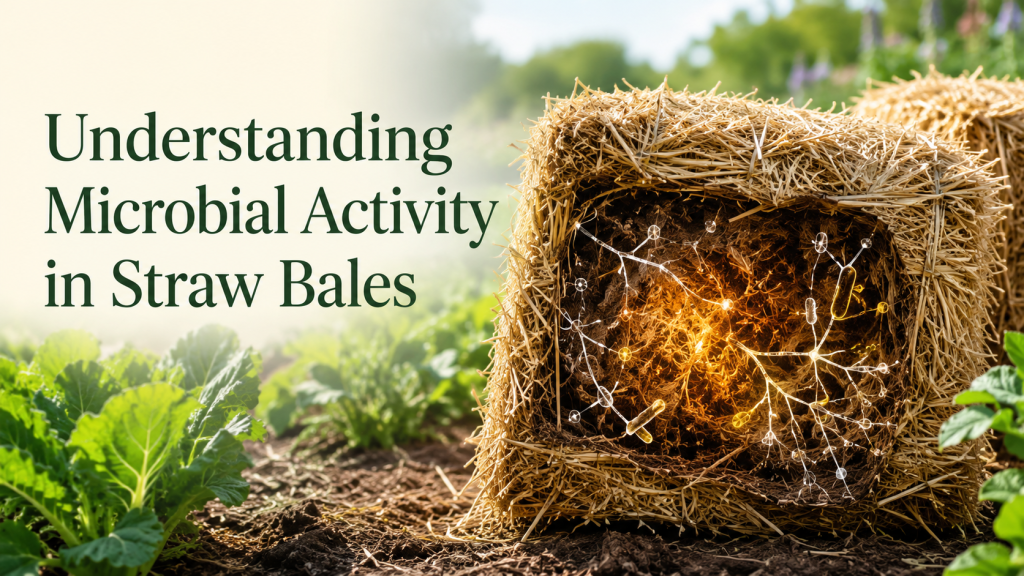
A straw bale garden looks simple from the outside.
You set up a bale, water it, condition it, and plant into it. Yet the real work happens inside the bale, where tiny living organisms begin breaking down the straw and turning it into a better place for roots to grow.
That hidden process is called microbial activity.
In straw bale gardening, microbial activity is the reason a dry bale can become a productive growing environment. Without it, the bale remains stiff, dry, and low in available nutrients. Once the right microbes become active, the inside starts to change. The straw softens, the bale warms, nutrients begin to move, and plant roots can settle into a more useful growing space.
This is why conditioning matters so much. It does not simply “feed the bale.” It starts the biological process that makes the bale work as a garden bed.
If you want better results from straw bale gardening, it helps to understand what microbes do, what they need, and how products like BaleBuster support the process.
What Is Microbial Activity in Straw Bales?
Microbial activity refers to the work done by bacteria, fungi, and other tiny organisms inside the bale.
These organisms feed on organic material. In this case, that material is straw. As they break it down, the bale begins to decompose from the inside.
That decomposition changes the bale in several ways.
The straw becomes softer. The inside starts to hold moisture better. Heat may build up during the active stage. Nutrients become easier for plants to access. Over time, the bale behaves less like dry straw and more like a composting growing medium.
This is the basic idea behind the Straw Bale Gardens method. On the main Straw Bale Gardens education site, the method explains that the straw inside the bale begins to decay and becomes conditioned compost for plant roots.
A fresh bale does not offer that environment immediately. It needs the right conditions first.
That is where conditioning comes in.
Why Microbes Matter Before Planting
Plants need more than a place to sit.
Roots need air, moisture, warmth, and available nutrients. Fresh straw does not provide all of these in the right form at the beginning.
Microbes help bridge that gap.
As bacteria and fungi begin working inside the bale, they break down the straw’s structure. This opens the bale, softens the material, and creates a better root zone. At the same time, the decomposition process helps release nutrients in a form plants can use.
A gardener may only see the outside of the bale. Meanwhile, the important changes are happening deep inside.
That is why planting too early can lead to weak results. The bale may look ready from the outside, but the internal environment may not support strong root growth yet.
A properly conditioned bale gives seedlings a better start because the microbes have already begun preparing the growing space.
What Microbes Need to Do Their Job
Microbes need the right environment before they can work efficiently.
Three things matter most:
Water.
Nutrients.
Warmth.
Water wakes up the process. Dry straw slows everything down because microbes need moisture to move, feed, and multiply.
Nutrients give microbes the fuel they need. Straw contains a lot of carbon, but microbes also need nitrogen and other nutrients to grow quickly. Without enough nutrient support, the bale may decompose too slowly.
Warmth helps the process move faster. Cool weather can slow bacterial growth, while mild or warm conditions usually help the bale become active sooner.
When these three conditions work together, microbial activity increases. The bale starts to heat, soften, and transform.
Why Straw Bales Heat Up During Conditioning
One of the most noticeable signs of microbial activity is heat.
As microbes feed on the straw and multiply, they release heat as part of the decomposition process. This is similar to what happens inside a compost pile.
That warmth is a good sign. It means the bale has started changing internally.
However, heat alone does not mean the bale is ready for planting. During the active stage, the inside may become too warm for young roots. Gardeners should allow the process to settle before planting seedlings into the bale.
A good rule is to treat heat as a progress sign, not a planting signal.
If the bale feels active and warm, the microbes are doing their job. Once the strongest heat drops and the bale feels more stable, planting becomes safer.
The Role of Nitrogen in Microbial Activity
Nitrogen plays a major role in straw bale conditioning.
Microbes need nitrogen to multiply and break down the straw efficiently. Without enough nitrogen, the bale may sit wet but inactive. It may not warm up properly, and the straw may not soften fast enough for planting.
That is why the conditioning product matters.
The article on organic nitrogen at Straw Bale Gardens explains that blood meal and feather meal can work as organic nitrogen sources. It also explains why some materials, like many manures, may not contain enough active nitrogen to condition bales within the desired timing.
This is where beginners often struggle.
They know the bale needs “fertilizer,” but they may not know what kind, how much, or why it matters. Using the wrong material can delay the process or create uneven results.
Rather than guessing, many gardeners choose a product made for the bale conditioning stage.
How BaleBuster Supports the Process
BaleBuster products are designed to support bale conditioning.
The goal is to help microbes colonize the bale and start the breakdown process. Once microbes become active, they help move the bale toward the compost-like environment plants need.
For a one-bale organic setup, BaleBuster1 is listed as a 100% organic bale conditioning formula. The shop notes that it contains porcine blood meal, Trichoderma fungi, and Bacillus bacteria, and that it comes in the right quantity for preparing one bale.
For a larger garden, BaleBuster20 is the twenty-bale option. Its product page lists fungi and live bacteria, including Bacillus subtilis and Bacillus megaterium, and explains that the formula uses traditional nitrogen sources to feed microbes.
If you plan to start with a small four-bale garden, BaleBuster4 fits that setup because it is made for four average-size bales.
The product choice should follow the garden size. One bale needs a one-bale product. Four bales need a four-bale product. Twenty bales need a larger option.
Fungi and Bacteria: What They Do Inside the Bale
Bacteria and fungi do not all work the same way, but they support the same goal in a straw bale garden.
Bacteria multiply quickly when moisture, nutrients, and warmth line up. They help start the decomposition process and break down organic material inside the bale.
Fungi can help break down tougher plant material. Straw has strong fibers, so fungal activity plays a useful role as the bale continues to soften and decay.
Together, these microbes help turn the bale into a better root environment.
The BaleBuster product pages mention fungi and bacteria because these organisms help speed decomposition and support the conditioning process. That is important because straw bale gardening depends on the bale becoming biologically active before planting.
A bale without active microbial life behaves like dry straw.
A conditioned bale behaves more like a living garden bed.
How Water Affects Microbial Activity
Water can help or hurt the process.
Without enough moisture, microbes slow down. The bale may stay dry inside, even if the surface looks damp.
Too much water can also cause problems. A soaked bale may lose airflow, and microbes need oxygen as well as moisture.
The best approach is steady moisture.
During conditioning, water helps carry the conditioning product into the bale. It also gives microbes the environment they need to multiply. After planting, moisture keeps the root zone active and helps plants continue growing.
This is why the garden location matters. Place bales where you can water them without stress.
A multi-bale garden far from water becomes hard to maintain. Even a one-bale setup needs regular attention during the conditioning stage.
Why Some Bales Do Not Get Hot
Sometimes gardeners condition their bales and wait for heat, but nothing seems to happen.
That can feel frustrating.
Several things may cause slow microbial activity:
The weather may be too cold.
The bale may not have enough moisture.
The nutrient source may not be strong enough.
The bale may need more time.
The conditioning product may not have reached the center of the bale.
Cool weather often slows the process. Microbes work faster when conditions are warm enough. If your bales do not heat quickly in cold weather, the solution may simply be patience and better timing.
Instead of assuming the garden failed, check the basics first.
Is the bale moist inside?
Did you use the right amount of conditioning product?
Has the weather stayed cold?
Did the bale receive enough time?
These questions usually reveal the issue.
How to Know Microbial Activity Has Started
You do not need a laboratory to know your bale is becoming active.
Several signs can help.
The bale may feel warm inside.
The straw may begin to soften.
Water may absorb more easily.
The inside may smell more earthy.
The bale may feel less stiff than it did at the start.
These signs show that the bale has begun changing. However, avoid planting only because one sign appears. Look for a combination of warmth, moisture, softening, and time.
A bale can begin microbial activity before it becomes ready for planting. Give the process enough time to settle.
What Happens After Planting
Microbial activity does not stop when you plant.
The bale continues to decompose during the growing season. That ongoing breakdown helps maintain a useful root environment.
As plants grow, their roots move into the softened bale. The microbes keep working around that root zone, while moisture and nutrients continue moving through the bale.
This is one reason straw bale gardens can support strong growth when the setup is done well.
The bale becomes more than a container. It becomes an active growing system.
That said, gardeners still need to water consistently and follow the method. Microbes support the process, but they do not replace garden care.
Why Understanding Microbes Helps You Buy Smarter
When you understand microbial activity, product choices become clearer.
You stop asking, “Do I need fertilizer?”
A better question becomes, “What will help the microbes condition this bale properly?”
That shift matters.
The conditioning stage is not about adding random nutrients. It is about creating the right biological reaction inside the straw.
For one bale, BaleBuster1 gives the one-bale organic option.
If for a beginner four-bale layout, BaleBuster4 matches the garden size.
For larger setups, BaleBuster20 keeps the product size aligned with twenty bales.
If you need guidance with the method, the BaleBuster4 Starter Kit includes the four-bale product with Straw Bale Gardens Complete.
Buying becomes easier when the goal is clear: feed the microbes, condition the bale, then plant when the bale is ready.
Common Mistakes That Slow Microbial Activity
A few mistakes can delay the conditioning process.
Starting too late creates pressure and tempts gardeners to plant before the bale is ready.
Letting the bale dry out slows microbial growth.
Overwatering can reduce airflow inside the bale.
Using weak or unsuitable nutrient sources may not feed microbes well enough.
Placing bales in a poor location can make watering and sunlight harder to manage.
Guessing product amounts can also create uneven results, especially in multi-bale gardens.
Most of these problems come from poor planning. Count the bales first, choose the matching BaleBuster product, keep water access close, and begin conditioning before planting day.
Simple Microbial Activity Checklist
Use this checklist during conditioning:
- The bale stays moist, not soaked.
- The conditioning product matches the bale count.
- Water reaches the inside of the bale.
- The bale begins to warm.
- Straw starts to soften.
- The weather allows microbial activity to build.
- The bale completes the recommended conditioning period.
- Planting waits until the bale is ready.
This checklist keeps the process simple without turning it into guesswork.
FAQ: Microbial Activity in Straw Bales
What causes microbial activity in straw bales?
Moisture, nutrients, and warmth help bacteria and fungi become active inside the bale. Once they start feeding on the straw, decomposition begins.
Why does a straw bale get warm?
Microbes release heat as they break down organic material. Warmth usually means decomposition has started inside the bale.
Can I plant before microbial activity starts?
It is better to wait. A fresh bale has not yet become a good growing environment for roots.
Does BaleBuster contain microbes?
Some BaleBuster product pages list fungi and bacteria as part of the formula. These organisms help support the decomposition process inside the bales.
What if my bale does not heat up?
Check moisture, weather, nutrient application, and timing. Cold weather and dry bales often slow microbial activity.
Final Thoughts
Microbial activity is the hidden engine behind straw bale gardening.
It turns a dry bale into a living growing environment. It softens the straw, helps release nutrients, generates warmth, and creates better conditions for plant roots.
That is why conditioning should never be treated as a small step.
When microbes have what they need, the bale changes from the inside out. Once that process starts, the garden has a stronger foundation.
Start with the right number of bales.
Choose the BaleBuster product that matches your setup.
Keep the bales moist.
Give microbes enough time to work.
Then plant into a bale that is ready to support healthy growth.