
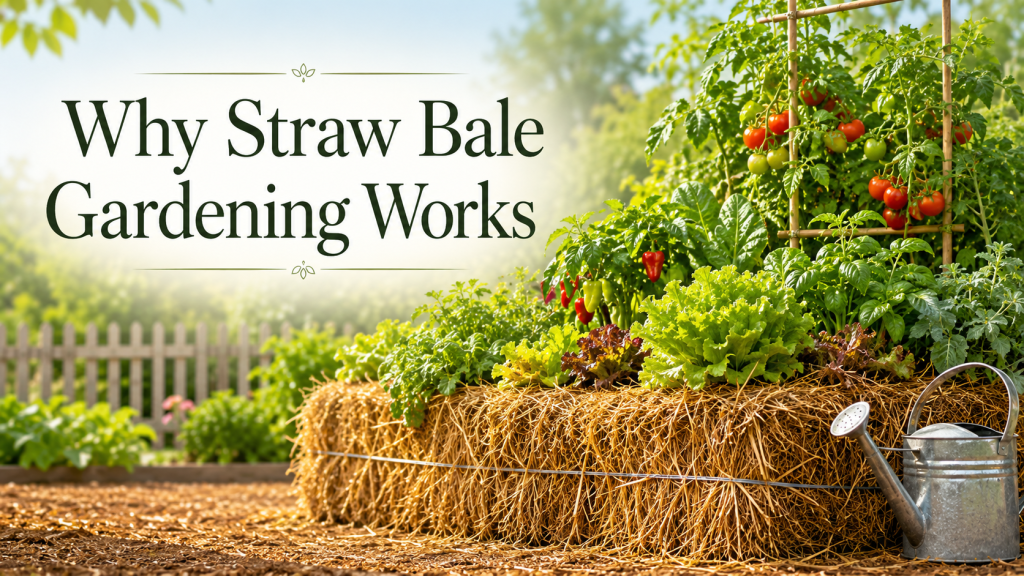
Straw bale gardening works because the bale becomes more than a block of straw.
At first, it looks like a simple container. After conditioning, the inside starts to change. The straw begins breaking down, the bale warms, moisture settles into the material, and plant roots get a better place to grow.
That is the basic idea behind the Straw Bale Gardens method. Instead of digging into poor soil or building raised beds, you use the bale itself as the growing space.
The outside of the bale holds the shape. The inside becomes the active growing environment.
That simple shift is what makes the method useful for people with poor soil, limited space, or less time for traditional garden prep. It also explains why the setup needs the right preparation before planting.
A straw bale garden works best when you understand two things:
Why the bale works.
What helps the bale perform better.
This guide breaks both down in a practical way.
The Bale Works Like a Container
One reason straw bale gardening works is that the bale acts like a container.
The strings hold the bale together, while the straw gives the plants a raised growing space. Once the bale sits in the right location and goes through conditioning, it can support vegetables, herbs, and flowers without relying on the ground underneath.
That makes the method flexible.
You can place bales in a backyard, on poor soil, near a driveway, or in a space where digging does not make sense. The key is to choose a spot with enough sunlight and easy water access.
The learning hub at Straw Bale Gardens explains the method as a different type of container gardening. The bale itself becomes the container, and the decomposing straw becomes the growing environment.
This is why the method appeals to many gardeners. It removes much of the heavy work that comes with traditional garden beds.
Decomposition Creates the Growing Environment
A fresh straw bale is not ready for planting right away.
It needs to begin decomposing inside first.
That process changes the bale from dry straw into a softer, warmer, more useful growing medium. During conditioning, water and nutrients help microbes become active. Those microbes start breaking down the straw from the inside.
As the bale changes, roots get a better environment.
The material becomes easier to grow through. Moisture spreads more evenly. Nutrients become more available. The bale begins acting less like dry straw and more like a composting garden bed.
This is why conditioning matters.
You are not just wetting the bale.
You are starting the internal process that makes the bale useful for plants.
The Raised Height Makes Gardening Easier
Straw bale gardening also works because the plants grow above ground level.
That raised height can reduce bending and make planting, watering, pruning, and harvesting more comfortable.
For many gardeners, this is a major advantage.
Traditional gardening often requires digging, kneeling, and working close to the ground. Bales lift the growing area higher, which makes the garden easier to reach.
That does not mean there is no work involved. You still need to water, plant, monitor crops, and keep the bales prepared.
Even so, the setup removes a lot of the strain that comes with preparing soil beds.
Better Drainage Helps Prevent Water Problems
Straw bales can drain better than many garden soils.
Heavy clay soil can hold too much water around plant roots. Some garden beds stay wet after rain and create poor growing conditions. A conditioned bale gives water a different path. It can hold moisture while still allowing extra water to move through.
That balance helps plants.
Roots need moisture, but they also need air. When a growing space stays too wet, roots struggle. When it dries too quickly, plants suffer too.
A properly conditioned bale gives you a middle ground.
It holds enough water to support growth, but it does not behave like compacted soil.
Fewer Soil Problems Come with the Setup
Another reason straw bale gardening works is that you are not planting directly into existing garden soil.
That can reduce some problems linked to poor soil structure, weed pressure, and soil-borne issues.
Since the bale serves as the growing space, you start with a cleaner setup than many traditional beds. You still need good garden habits, but you avoid some challenges that come from planting into the same soil year after year.
This is especially helpful for gardeners who have struggled with poor ground conditions.
If your yard has rocky soil, compacted soil, or soil that does not drain well, straw bale gardening gives you another option.
Conditioning Makes the Difference
The bale does not become productive by accident.
Conditioning prepares it.
Without conditioning, a fresh bale stays too dry, stiff, and low in available nutrients. Plants may struggle because the roots do not get the environment they need.
With proper conditioning, the bale becomes more active inside. Microbes begin working. Heat may build. The straw softens. Moisture becomes easier to manage.
This is why products like BaleBuster4 fit the method. BaleBuster4 is made for conditioning four average-size bales, which makes it useful for a small starter garden.
For a one-bale setup, BaleBuster1 gives gardeners a one-bale organic conditioning option.
Larger gardens need a different product size. If you plan to prepare twenty bales, BaleBuster20 matches that scale.
The product choice should follow the garden size, not guesswork.
Good Placement Helps the Garden Work Better
Even a well-conditioned bale needs the right location.
Start with sunlight.
Most vegetables need strong light to grow well. A bale placed in too much shade will limit what plants can do, even if the conditioning process goes well.
Next, think about water.
Bales need moisture during conditioning and throughout the growing season. A garden placed far from water becomes harder to manage. That problem grows quickly if you have several bales.
Finally, consider access.
Leave enough room to walk around the bales. You should be able to water, plant, check leaves, add support, and harvest without stepping over plants.
Good placement saves effort all season.
Bale Position Can Affect the Setup
Small details matter when placing bales.
The Straw Bale Gardens article about bale position explains that keeping the strings on the sides helps preserve bale compression. It also notes that compressed bales decompose more quickly during conditioning.
That means the bale should hold together while the inside breaks down.
Loose straw may decompose more slowly. A bale that falls apart too early can become harder to manage. Good bale placement helps the garden stay stable long enough for plants to grow well.
Before conditioning starts, place the bales where they will stay. Once they absorb water, moving them becomes much harder.
The Right Product Size Prevents Waste
Straw bale gardening works better when the product size matches the bale count.
This sounds simple, but it prevents many problems.
A one-bale garden does not need a twenty-bale box. A twenty-bale garden should not rely on a product meant for four bales.
Matching product to bale count keeps the process clearer.
For example, a gardener testing the method with one bale can start with BaleBuster1. A beginner setting up four bales can choose BaleBuster4. A larger garden calls for BaleBuster20.
That simple buying rule helps gardeners avoid stretching product too far or buying more than they need.
Watering Consistency Improves Results
Water keeps the method moving.
During conditioning, water helps carry nutrients into the bale. It also gives microbes the moisture they need to break down straw.
After planting, water supports the roots and keeps the growing environment active.
Inconsistent watering can slow the process. If the bale dries out too often, microbial activity may drop. If the bale stays soaked, airflow can suffer.
Aim for steady moisture.
A hose works best for several bales. A watering can may be enough for one bale. Larger setups need a better system, especially during warm weather.
The easier your watering routine feels, the more likely you are to stay consistent.
Plant Support Helps Productive Crops
Some crops need support.
Tomatoes, cucumbers, beans, and other taller plants can grow heavily in a good bale setup. If you wait too long to support them, stems may bend or break.
Add cages, stakes, or trellises early.
Support works better when you plan it before planting. Put climbing crops where they can reach a trellis. Give tomato plants space for cages. Keep herbs and smaller crops in easier-access areas.
A strong layout helps the garden work better after plants mature.
The empty bale stage is the best time to plan for the full-grown garden.
Learning the Method Helps Beginners Avoid Mistakes
Straw bale gardening works best when the gardener understands the full process.
That includes where to place the bale, when to condition, how to water, when to plant, and what to expect as the bale changes.
For beginners who want the product and the method together, the BaleBuster4 Starter Kit includes BaleBuster4 and Straw Bale Gardens Complete.
That type of setup helps new gardeners avoid piecing together random advice.
A product can prepare the bale, but learning the method helps the gardener use it correctly.
What Makes Straw Bale Gardening Work Better?
Several small choices can improve the entire season.
Choose firm bales that hold together well.
Place them in a sunny spot before watering.
Keep the strings on the sides when possible.
Condition the bales before planting.
Use the BaleBuster product that matches your bale count.
Keep water access close.
Add plant supports before crops become heavy.
Avoid buying seedlings too early.
Give the bale time to become ready.
These steps are not complicated, but they work together.
The method becomes easier when each part supports the next.
Common Mistakes That Weaken the Method
Some mistakes can make straw bale gardening harder than it needs to be.
Planting too early is one of the biggest issues. A bale needs time to prepare before roots go in.
Poor watering can also create problems. Dry bales slow the internal process, while soaked bales may lose balance.
Another mistake comes from using the wrong product size. If you condition more bales than the product supports, results may become uneven.
Crowded layouts can hurt the garden later in the season. Plants need space, and gardeners need access.
Skipping learning resources can also slow beginners down. The method is simple, but it still follows a process.
Most problems become easier to avoid when you plan before planting day.
A Simple Setup for Better Results
A good first straw bale garden can stay simple.
Choose four bales if you want a useful beginner setup.
Place them near water and sunlight.
Use BaleBuster4 to condition the four-bale garden.
Add simple tools like gloves, a hand trowel, and plant supports.
Plant after the bales finish conditioning.
That setup gives you enough space to grow a mix of plants without taking on a large project.
A one-bale setup works well for testing. A twenty-bale setup fits gardeners who want a larger growing plan.
The best setup is the one you can manage well.
FAQ: Why Straw Bale Gardening Works
Why does straw bale gardening work?
Straw bale gardening works because the bale acts as the container, while the inside changes through conditioning. As the straw decomposes, it creates a better rooting environment for plants.
Do I need to condition the bale first?
Yes. Conditioning prepares the bale before planting. It helps activate decomposition and makes the bale more useful for roots.
Can I use straw bale gardening if I have poor soil?
Yes. Since the bale becomes the growing space, the method can work where traditional soil gardening is difficult.
Which BaleBuster product should I use?
Choose based on bale count. BaleBuster1 fits one bale, BaleBuster4 fits four bales, and BaleBuster20 fits twenty bales.
What helps a straw bale garden perform better?
Good sunlight, steady watering, proper conditioning, correct bale placement, plant support, and the right product size all help the garden perform better.
Final Thoughts
Straw bale gardening works because it turns a simple bale into an active growing space.
The bale holds the plants above ground. Conditioning changes the inside. Microbes help break down the straw. Water keeps the process moving. Roots grow into a warmer, softer, more useful environment.
The method becomes stronger when the setup supports that process.
Choose good bales.
Place them well.
Condition them before planting.
Use the BaleBuster product that matches your garden size.
Keep watering simple.
Learn the method before you rush the season.
When those pieces come together, straw bale gardening becomes easier to understand and easier to manage.